TL;DR: Most states manage nursing facility capacity with a blunt instrument — either a permanent moratorium that freezes the market regardless of need, or no meaningful entry discipline at all. Louisiana HB 654 proposes something better: a data-driven, parish-by-parish process that opens the market where need exists, conditions expansion on demonstrated operator quality, and gives preference to private-room development over more of the obsolete physical plant Medicaid has tolerated for decades. Other states should take notes.
An Industry Stuck at a Policy Fork
Most states handle nursing facility capacity through one of two approaches: a permanent moratorium that freezes the market regardless of need, or no meaningful entry discipline at all.
Neither works. Moratoria protect incumbents — including failing ones. Unmanaged entry floods markets without improving quality or modernizing physical plant. Both approaches treat capacity as the variable to control while ignoring what actually matters: whether the right operators are building the right buildings in the right places.
Louisiana HB 654 proposes something better.
It Replaces a Blunt Instrument with a Disciplined Process
The bill would repeal Louisiana's current moratorium structure and replace it with a parish-by-parish need review. Beginning August 1, 2026, and every three years thereafter, the Louisiana Department of Health (LDH) would compare each parish's beds-to-65-plus-population ratio against the national average. If a parish is undersupplied by 30 to 120 beds, LDH must accept applications to expand existing facilities. If the shortfall exceeds 120 beds, LDH must accept applications for a new 120-bed facility.
That structure gets the foundational question right. Market entry should be tied to demonstrated need — not to bureaucratic discretion and not to a permanent wall. States should not suppress development where need exists. But opening the door without regard to quality, capability, or physical design is not a policy. It is an abdication.
It Conditions Expansion on Quality
Existing facilities may expand only if their CMS staffing and quality measure subcomponents each exceed three stars. That is not a high bar, but it is a meaningful one. Expansion approval should not be available to a facility that cannot clear a basic performance threshold. The bill does not reward incumbency for its own sake. It rewards performance.
It Gives Preference to the Right Kind of Buildings
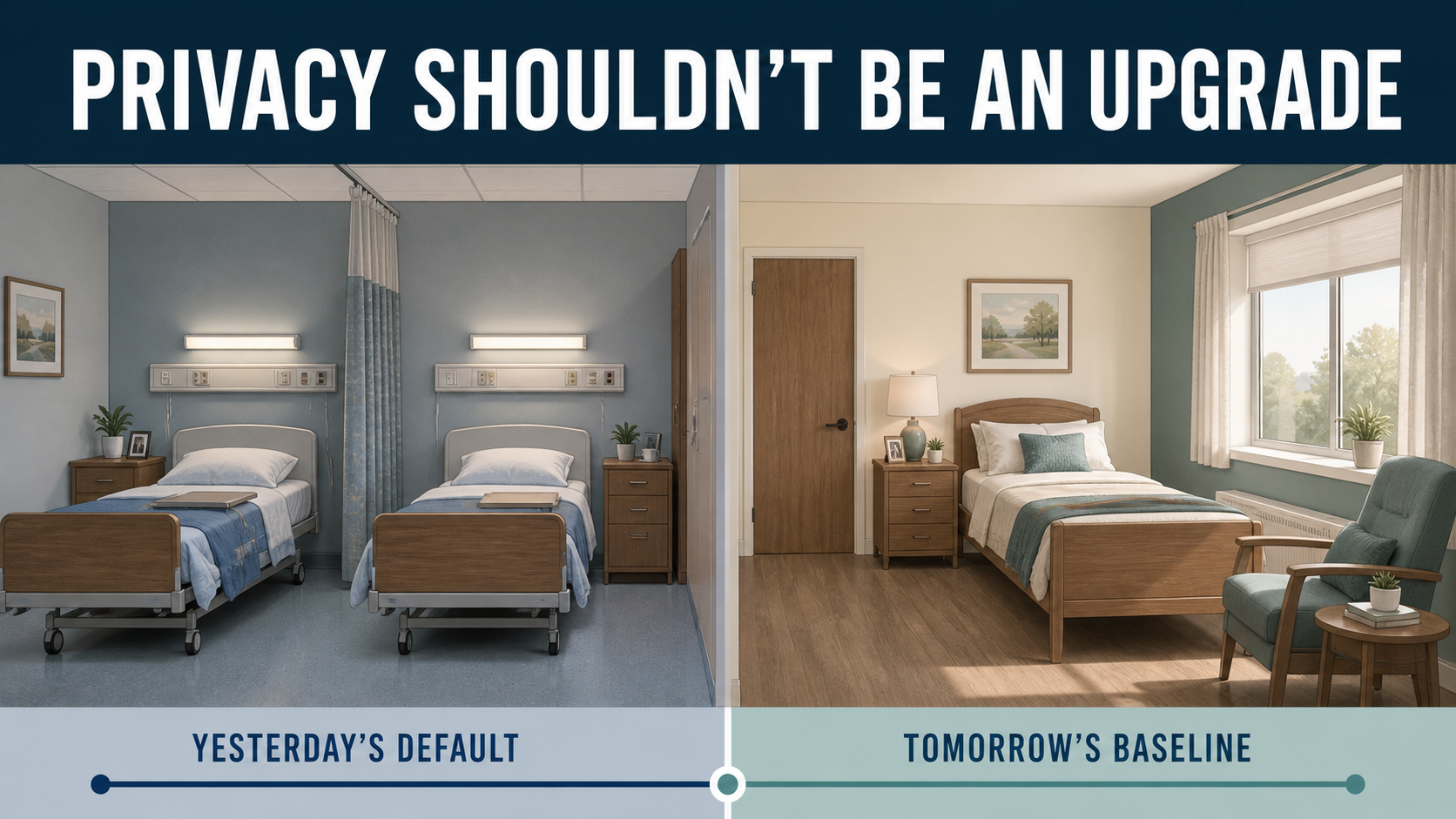
For new facilities, LDH must give preference to applicants committing to at least 95% private rooms and private restrooms, with a minimum of 550 square feet per bed. That is not cosmetic. Private rooms reduce infection transmission, protect resident dignity, and create the operational flexibility modern care delivery requires. If a state is going to authorize new nursing facility construction, it should favor buildings that reflect what the next generation of care demands — not more of the obsolete, multi-occupancy physical plant that Medicaid has subsidized for decades.
It Looks at the Real Operator, Not Just the Proposal
LDH must rank applicants based on resident accommodations, the quality of facilities they already own and operate, and their experience building or renovating facilities in Louisiana. Their CMS star rating is calculated as a cumulative statewide average across all facilities owned, operated, and managed — not just the flagship property. For new facilities, only entities that are both owner and operator may apply.
That is how operator selection should work. A well-drafted proposal from a poorly-performing operator is not a reason to authorize new capacity. A state issuing new licenses should ask what kind of operator is seeking entry and what that operator's actual record shows.
It Prevents Approvals from Sitting Idle
A license awarded under the bill triggers a one-year deadline to secure permits and begin construction. Failure returns the license to the next most eligible applicant. Speculative licensing — acquiring approvals without building — distorts market data and deprives undersupplied communities of real capacity. The bill closes that door.
The Right Question Deserves the Right Answer
HB 654 reflects a coherent philosophy about what nursing facility market policy should do. The state's role is not to freeze capacity in place indefinitely, and it is not to stand aside while capital flows indiscriminately. It is to identify where need exists, open the door to qualified entrants, and give preference to the operators and buildings the state actually wants more of.
It is not anti-market to condition entry on quality and design. It is anti-market to allow a permanent moratorium to protect failing incumbents from competition they cannot survive on merit.
Louisiana asked the right question: if the state is going to authorize new nursing facility capacity, who should be allowed to build it — and what should that building look like?
HB 654 gives the right answer. Other states should be paying attention.