AT A GLANCE
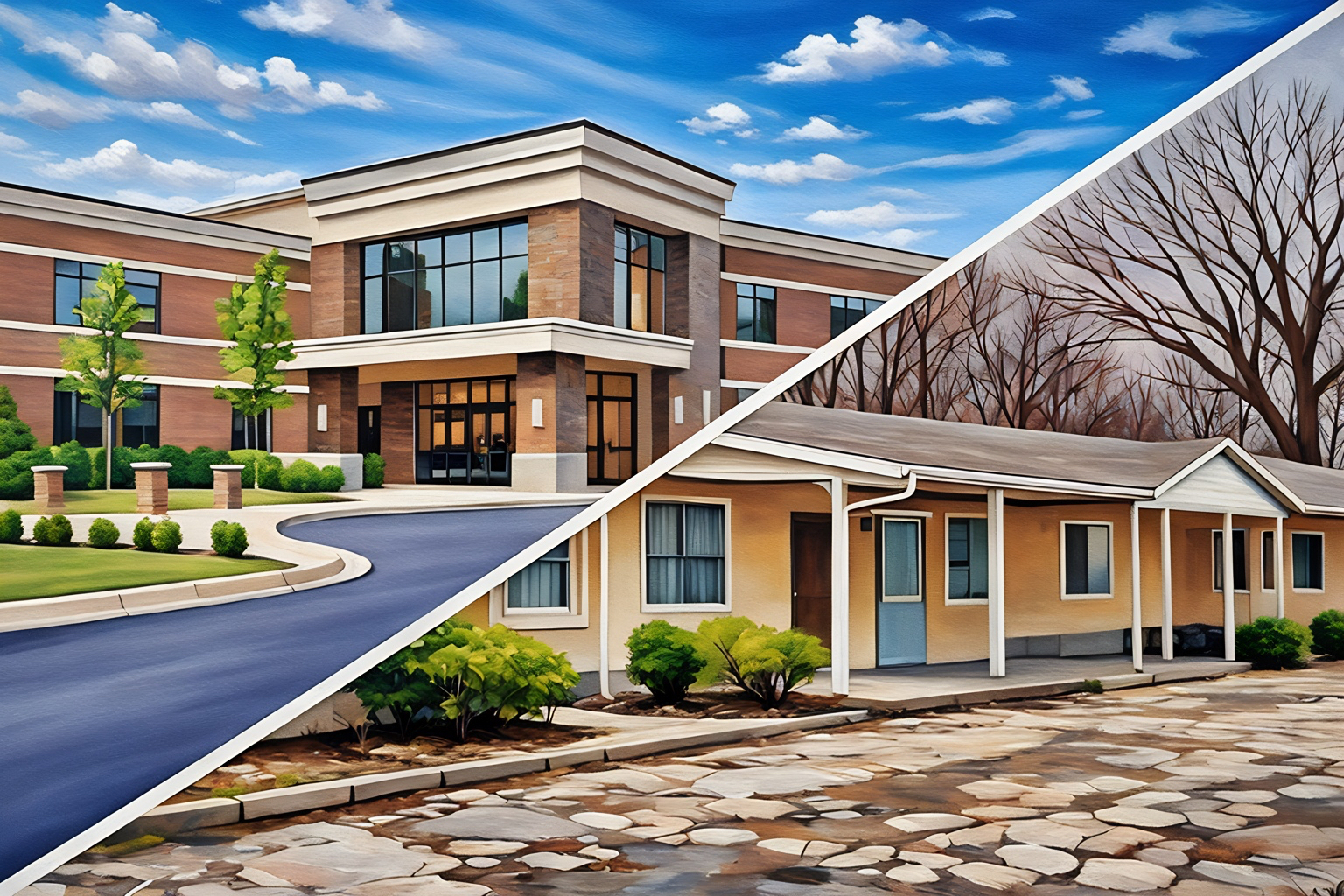
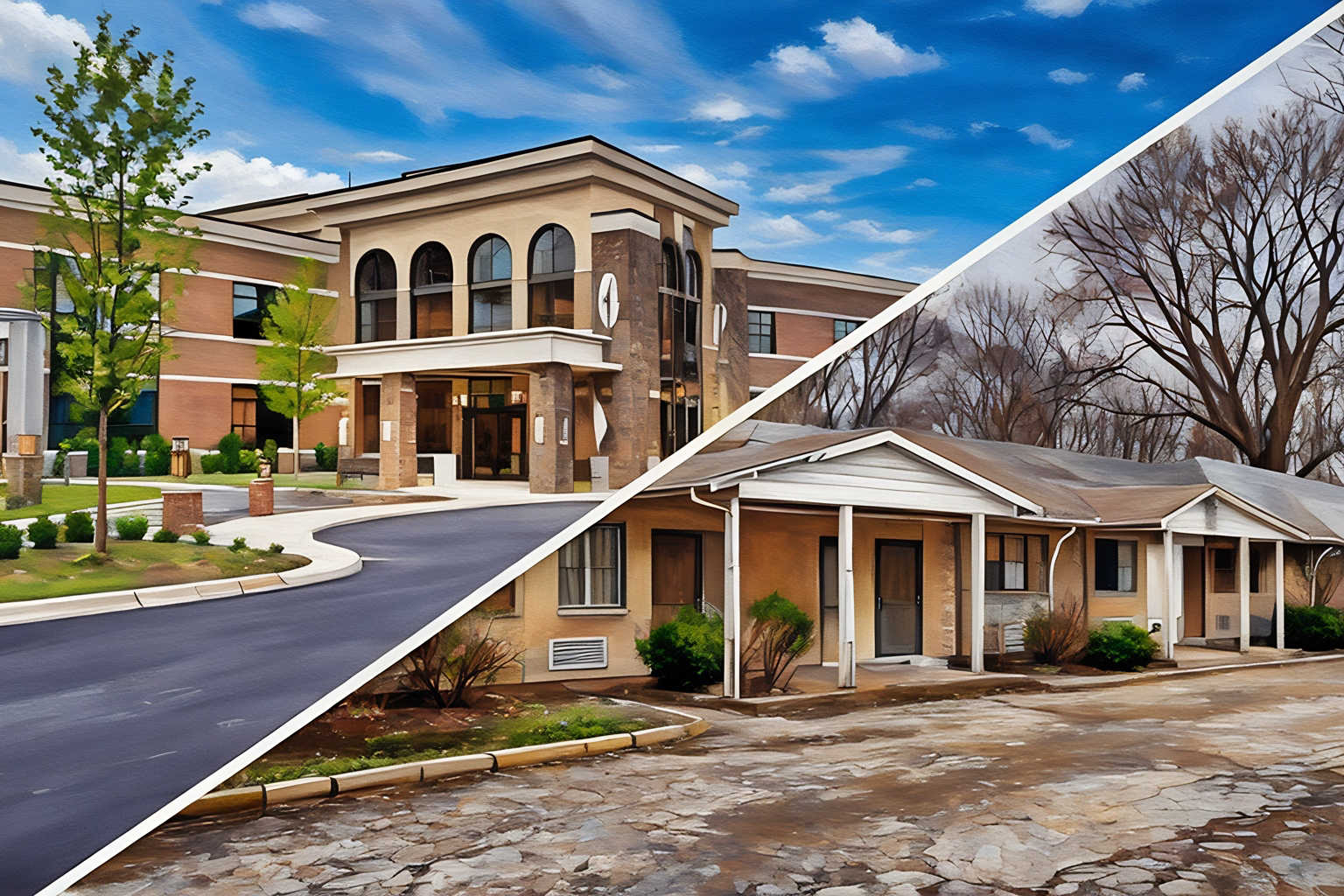
The problem. Medicaid treats fundamentally different buildings as financially equivalent. A facility built around shared rooms and institutional corridors receives much the same reimbursement as one designed for private rooms, infection-resilient layouts, and contemporary care delivery. That is not neutral policy. It is a choice.
Why the market isn't fixing it. In 2023, fewer than 40 new nursing homes opened across the entire country. A facility built to contemporary standards costs significantly more and receives no more in reimbursement than the building it would replace. Under those conditions, capital goes elsewhere. The buildings do not get built.
The framework. States do not need to spend more. They need to pay differently — on a budget-neutral basis, within existing Medicaid authority. Enhanced reimbursement for facilities meeting Structural Quality Standards. Time-bounded recognition for genuine modernization. Progressive payment reduction for facilities that remain structurally obsolete.
The standard. The private room with private bathroom is the entry condition. Six structural domains define the full platform: infection control, resident privacy and dignity, resident well-being, technology infrastructure, staff workflow, and emergency resilience.
The bottom line. States have the authority to act now. The question is whether reimbursement policy will lead the sector's evolution — or continue to subsidize the past.
I. Introduction
For decades, Medicaid has treated fundamentally different buildings as financially equivalent — reimbursing facilities designed around shared rooms, shared bathrooms, and institutional corridors in much the same manner as facilities designed for private rooms, private bathrooms, infection-resilient layouts, and technology-enabled care. That is not a neutral policy position. It is a choice. And the buildings that exist today reflect the consequences of that choice.
The buildings have not changed because there has been no financial reason to change them. A facility can draw full reimbursement on a building that has not been meaningfully updated in thirty years, because the payment system does not distinguish between a building that supports contemporary care delivery and one that does not. Operators are not irrational. They respond to the financial environment they operate in. When Medicaid pays the same regardless of what the building can do, the market produces more of the same buildings — and the residents who depend on Medicaid continue to receive care in environments that would not be built today if anyone had to choose.
The sector needs better buildings. It is not producing them. Demand for nursing facility care is projected to grow substantially as the Baby Boomer generation reaches peak need over the next decade. Yet in 2023, fewer than 40 new nursing homes opened across the entire country. That is not a financing problem or a construction problem in isolation. It is the predictable result of a payment architecture that offers no premium for building better. A facility designed for private rooms, private bathrooms, and the infrastructure that infection control and technology-enabled care require costs significantly more to build and receives no more in reimbursement than the building it would replace. Under those conditions, capital goes elsewhere. The buildings do not get built.
Oversight cannot solve this. Survey pressure matters. Life Safety Code enforcement matters. But these tools were designed to ensure that facilities are safe and minimally functional — not to drive capital investment in better physical environments. A facility that passes its annual survey has no financial reason to go further. Regulatory frameworks set a floor. They were never intended to raise the ceiling.
We argue that reimbursement is the tool that raises it. Not by simply paying more for newer buildings, but by paying differently based on what a building can actually do — for residents who live there, for staff who work there, and for the care that needs to be delivered there. This brief connects that argument to defined Structural Quality Standards (SQS), establishing a clear relationship between what a building can support and what Medicaid should pay for it. Enhanced reimbursement for facilities that meet those standards. Recognition for genuine modernization. Real consequences for buildings that have not kept pace and show no credible path to doing so.
This brief is a companion to ASI's Structural Quality Standards for Nursing Facilities, which defines what structural quality requires across six domains. Here we address how that standard connects to payment — on the Medicaid side, where states have immediate authority and the tools to act, and on the Medicare side, where the path is more constrained but the principle is the same.
II. The Human Case
Before the policy mechanics, the resident case deserves to be stated plainly.
Nursing facility residents are not choosing between options in a competitive market. Most are Medicaid-dependent, cognitively or physically impaired, and entirely reliant on the facility in which they live for every aspect of their daily existence. They cannot leave if the building is outdated. They cannot demand a private room if none exists. They cannot insist on infection-control practices that the building's physical design makes impossible. They live with what they are given.
What they are given, in too many cases, is a building that was designed around assumptions that no longer reflect what good care looks like. Shared rooms that offer no meaningful privacy — for sleeping, for family visits, for end-of-life. Shared bathrooms serving multiple rooms or corridor populations, creating infection pathways that private bathrooms would eliminate. Institutional layouts designed for throughput rather than dignity. Buildings that are not wired for the connectivity that would let a family member check in via video, or a physician consult remotely, or a monitoring system flag a deteriorating condition before it becomes a crisis.
The residents in these buildings are not an abstraction. They are the reason this policy matters. A reimbursement system that treats their environment as financially equivalent to a better one is not neutral. It is a decision — made by policy, not by circumstance — that their comfort, dignity, and safety are not worth paying differently for.
They are.
III. Why the Current System Perpetuates the Problem
Medicaid reimbursement was not designed to reward structural quality. It was designed to recognize costs — what facilities spend on staff, on operations, and on capital invested in construction years or decades ago. That is a reasonable framework for covering costs. It is a poor framework for driving investment in better physical environments, because it measures what was spent rather than what currently exists.
The result is a system that actively works against improvement. A facility that invested in construction thirty years ago continues to draw capital-related reimbursement calculated around that original investment. The building ages. The reimbursement continues. The financial case for reinvestment remains weak, because any new investment must compete with the reimbursement the facility already receives for doing nothing.
This falls hardest on the residents who can least afford it. Operators serving private-pay residents face genuine market pressure to invest in better environments — residents and families compare options and choose accordingly. Medicaid-dependent residents have fewer alternatives. The payment system that serves them provides no comparable pressure to improve the buildings they live in. The facilities that depend most heavily on Medicaid reimbursement are often the ones operating in the oldest and least-updated environments.
The workforce dimension compounds the problem. Staffing shortages in nursing facilities are structural and will intensify as the population ages. Care delivery will increasingly depend on tools — telehealth, remote monitoring, AI-assisted clinical support — that require physical infrastructure to function. Reliable facility-wide connectivity. Compatible building systems. Layouts designed to accommodate point-of-care technology. A facility built before any of this existed, and not updated to support it, cannot participate fully in what care delivery will require — regardless of how much its operators invest in software or intent. The building either enables that future or it does not.
A payment system indifferent to all of this is not neutral. It is a policy choice to subsidize environments that cannot support the care residents need and the workforce the sector must sustain.
IV. The Medicaid Framework
State Medicaid agencies have the authority to act now. Rate structure, quality add-ons, capital recognition, supplemental payments, and enhanced reimbursement eligibility are all within existing state policy discretion. The question is not whether states can do this. It is whether they will frame it correctly and implement it with enough force to change behavior.
ASI's framework rests on a foundational reframe: states do not need to reduce reimbursement to align it with quality. They need to pay differently.
That distinction matters enormously for how this policy is received and for how it can be implemented. States can structure this framework on a budget-neutral basis — reallocating existing reimbursement toward facilities that meet structural quality standards rather than increasing total spending. The dollars in the system need not change. The relationship between those dollars and the physical environments they support must.
We present a framework with three components.
Enhanced reimbursement for facilities meeting Structural Quality Standards.
Facilities that satisfy the SQS framework — private rooms with private bathrooms as the foundational requirement, plus demonstrated capability across the six structural domains defined in the companion brief — should receive meaningfully higher reimbursement than those that do not. The premium must be real enough to affect capital decisions. A nominal add-on that barely moves the math will not change behavior. The enhanced payment should reflect what a better building costs to build and what it delivers — in resident outcomes, infection control, staff retention, and operational efficiency.
The precedent for this approach already exists. Arkansas has differentiated nursing facility reimbursement by room and bathroom configuration for years, assigning different per-bed values based on whether rooms are private with private bathrooms, semi-private with attached bathrooms, or dependent on shared facilities. Ohio has an approved Medicaid private-room incentive. CMS has accepted both. What is missing is a comprehensive framework that builds on those precedents and extends them across the full range of structural quality — not just room type.
Time-bounded recognition for genuine modernization.
Most existing facilities will not be replaced outright. Many can be substantially improved. A facility that undergoes genuine structural modernization — converting shared rooms to private rooms with private bathrooms, reconfiguring units to support infection control, installing the infrastructure that technology-enabled care requires — should receive enhanced reimbursement reflecting that investment. But the recognition must be time-bounded. Modernization resets the clock. It does not stop it. States should require periodic recertification and condition continued enhanced payment on demonstrated ongoing investment. A facility that renovated fifteen years ago and has done little since is not a modernized facility.
Progressive payment reduction for facilities that remain structurally obsolete.
A framework that rewards investment without imposing any consequence for inaction will not move the market. States must be willing to say plainly that a facility operating on decades-old design assumptions — shared bathrooms serving multiple rooms, layouts that prevent effective infection control, buildings that cannot support the technology residents and staff need — should not receive the same enhanced reimbursement as one that has invested in meeting contemporary standards. This is not a cliff. It is a glide path — modest reductions that increase over time for facilities that cannot demonstrate a credible modernization path, with the ability to restore reimbursement upon qualifying renovation or replacement.
Together these three components create an environment in which investing in better buildings is financially rational, meaningful progress is recognized, and indefinite inaction carries a real cost.
V. The Age Presumption
Age alone does not determine structural quality. A facility substantially renovated at year thirty-five may be more capable of delivering contemporary care than one built five years ago that never met structural quality standards. The standard is capability — what the building can do — not chronology.
But age is a reliable indicator of the assumptions under which a building was designed. A facility that has operated for decades without meaningful structural investment almost certainly reflects the institutional design vocabulary of its era — shared rooms, shared bathrooms, centralized nursing stations, long corridors built for throughput rather than resident experience. Those assumptions are embedded in the physical structure. Operational excellence can work around them to a degree. It cannot eliminate them.
For this reason, ASI believes states should establish a rebuttable presumption of structural obsolescence for facilities exceeding a defined age threshold without qualifying modernization. The presumption does not reduce payment automatically. It places the burden on the facility to demonstrate that it has been meaningfully updated — that it can support what contemporary nursing facility care requires — rather than placing the burden on the state to prove that it cannot. This presumption is rebuttable, evidence-based, and applied facility by facility. It is not a categorical judgment about age.
A range of twenty-five to forty years is a reasonable threshold — not because buildings automatically fail at a specific age, but because buildings of that vintage were almost certainly designed before contemporary expectations for privacy, infection control, and technology infrastructure existed. States may calibrate the threshold to their own facility landscape and set different thresholds for different building types.
What constitutes qualifying modernization must be defined with precision, because vague standards will be exploited. Routine maintenance does not qualify. Cosmetic renovation does not qualify. Qualifying modernization changes what the building can do. Converting shared rooms to private rooms with private bathrooms qualifies. Reconfiguring units to support infection-control separation qualifies. Installing infrastructure for technology-enabled care delivery qualifies. The test is functional: does the building now support what a contemporary nursing facility is expected to support?
VI. The Medicare Question
Medicare operates under tighter constraints than Medicaid when it comes to structural quality. The Skilled Nursing Facility Prospective Payment System pays a per-day rate adjusted for the clinical complexity of each patient's needs. Building age, room configuration, and infrastructure quality are not currently recognized payment variables. A direct age-based reduction to Medicare reimbursement does not fit cleanly within the existing architecture and would be difficult to defend on its own.
ASI believes the more defensible path is to use existing mechanisms to reward facilities that meet structural quality standards rather than to penalize those that do not meet an age cutoff. The absence of structural quality as a Medicare payment variable reflects the legacy design of the SNF payment system — not the irrelevance of the physical environment to care quality. CMS could add a structural quality component to the SNF Value-Based Purchasing program, which already adjusts Medicare payment based on defined quality measures. CMS could condition eligibility for certain enhanced payment opportunities on demonstrated compliance with structural quality standards. Or CMS could test a structural quality payment differential through Innovation Center demonstration authority, which allows new payment approaches to be piloted without a full regulatory overhaul.
The principle is the same as on the Medicaid side: the physical environment is a care quality variable — one that affects resident safety, infection control, staff performance, and the capacity to deliver care using the tools the sector will increasingly depend on. A payment system serious about quality should reflect that. Medicare already accepts the principle that payment should vary based on quality. ASI believes structural quality belongs in that framework.
VII. Answering Objections
Any reimbursement framework that creates winners and losers will generate resistance. The objections are predictable. They deserve direct answers.
“We are fully compliant with Life Safety Code. Why should our reimbursement change?”
Life Safety Code compliance ensures that a building meets minimum safety requirements. It does not ensure that the building supports resident privacy, effective infection control, technology-enabled care, or the workforce efficiency that contemporary nursing facility care requires. Compliance with the minimum is not the same as meeting the standard.
“This is a penalty on older buildings.”
It is not. It is a recognition that buildings have a functional lifespan, and that a building operating on design assumptions from several decades ago is not structurally equivalent to one that reflects current expectations — regardless of how well it has been maintained. Older facilities that have been genuinely modernized can fully qualify for enhanced reimbursement. Age is the trigger for review, not the basis for reduction. The basis is capability.
“This will reduce access to care.”
Access concerns are real and should be addressed directly — through targeted rate enhancements, transition funding, capital support mechanisms, and rural or essential-access designations tied to investment. What access concerns should not do is lower the structural standard itself. Residents in rural and underserved communities deserve the same quality physical environment as residents anywhere else. Addressing access and maintaining the standard are not in conflict. They require different policy tools applied simultaneously.
“Providers cannot afford to invest in modernization.”
The current system is part of the reason. When Medicaid pays the same regardless of what the building looks like, there is no financial case for the additional debt service that modernization requires. This framework creates that case. It does not guarantee that every facility can modernize — some cannot, and replacement may be the appropriate outcome for facilities that are genuinely beyond rehabilitation. But for facilities that can invest, this framework provides the financial rationale that the current system withholds.
“This policy will leave residents in outdated buildings worse off while others benefit.”
That concern deserves an honest answer, not a deflection. It is true that not every facility will modernize. Some owners will not take the steps required. Some buildings are beyond rehabilitation. Under this framework, those facilities will receive less enhanced reimbursement than facilities that invest — and some may ultimately close or be replaced. That is an uncomfortable reality of any incentive-based policy. But the alternative is not a comfortable one either. The current system guarantees that the status quo continues indefinitely — that the residents most dependent on Medicaid will keep receiving care in the least-updated environments, with no financial pressure on anyone to change that. No policy can instantly modernize every nursing facility in the country. This one does not claim to. What it does is create the conditions under which far more facilities invest in structural improvement than would otherwise do so — meaning far more residents receive care in better environments than they would under a system that remains indifferent to the quality of the building. Imperfect progress serves residents better than perfect inaction. The goal is not a flawless system. It is a better one.
“This is increased regulation.”
This framework does not create a new regulatory regime. Facilities are not required to do anything they are not already doing to continue participating in Medicaid. What changes is the relationship between the physical environment and enhanced reimbursement. That is a payment policy decision, not a regulatory one. States are not mandating investment. They are deciding what they will pay a premium for — and what they will not.
VIII. Conclusion
State Medicaid agencies do not need to reduce reimbursement to improve the environments in which nursing facility residents live. They need to pay differently.
The physical environment is not incidental to care quality. It determines whether residents have privacy. Whether infection can be contained. Whether staff can work efficiently. Whether families can be present. Whether the tools that will define care delivery over the next generation can actually be used. A reimbursement system that treats a building capable of all of this as equivalent to one that is not is not serving residents, providers, or the public interest.
The path forward is clear. Enhanced reimbursement for facilities that meet structural quality standards. Genuine recognition for facilities that invest in meaningful modernization. Real consequences — graduated and fair — for facilities that do not. A framework grounded in what the building can do, not how long ago it was built or how much was spent on it decades ago.
The sector stands at a moment when the choice matters enormously. Demand for nursing facility care will grow substantially over the next decade. The question is not whether the sector will evolve. It is whether reimbursement policy will lead that evolution — or continue to subsidize the past.
States have the authority to answer that question now. They should.
** See companion brief: Structural Quality Standards for Nursing Facilities **