I. Introduction
The physical environment of a nursing facility is not incidental to care quality. It is the platform on which care quality depends. Whether residents have privacy. Whether infection can be contained. Whether staff can work without unnecessary burden. Whether the tools that will define care delivery over the next decade can actually function. The building either supports these things or it does not — and a reimbursement system that cannot tell the difference is not measuring quality. It is ignoring it.
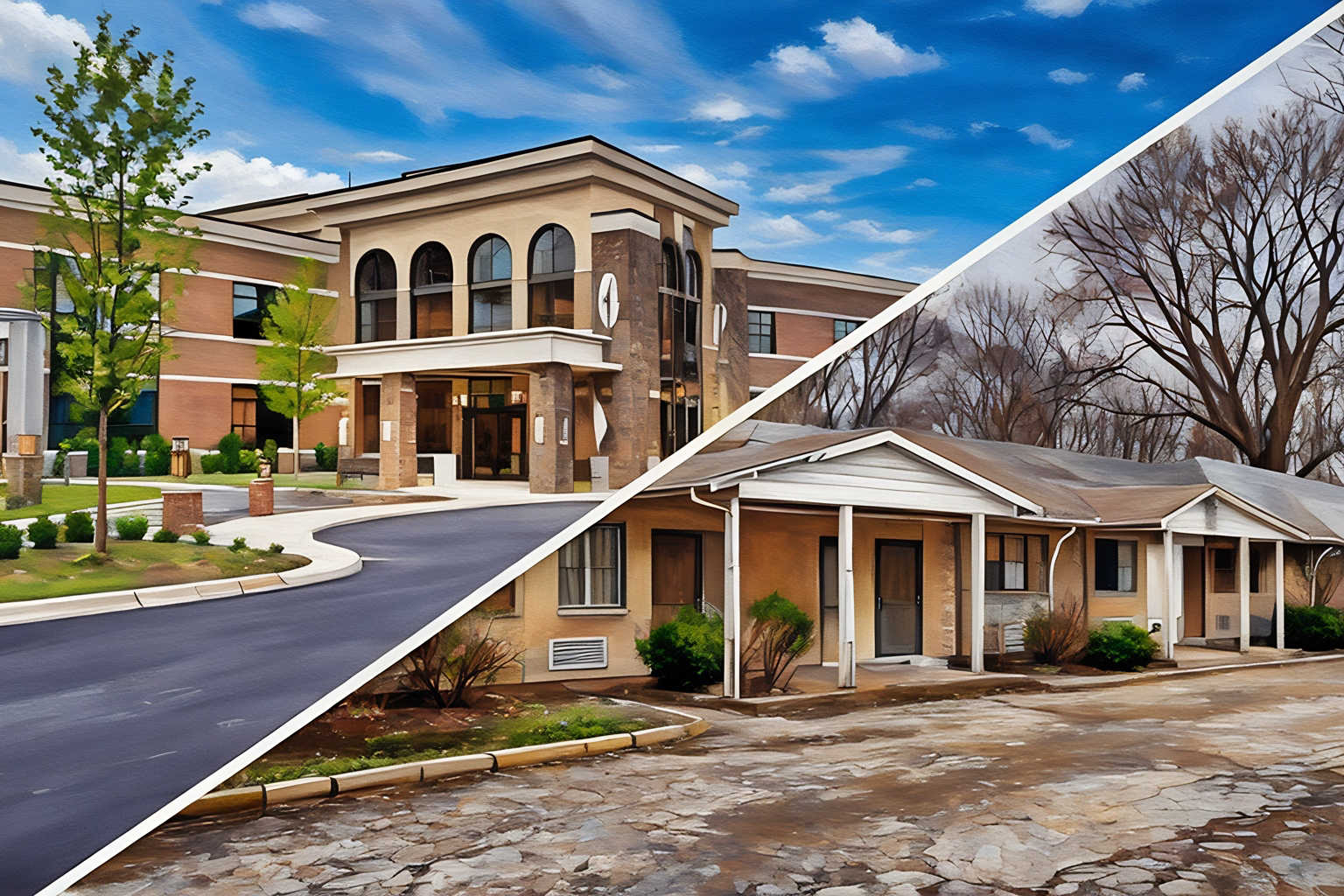
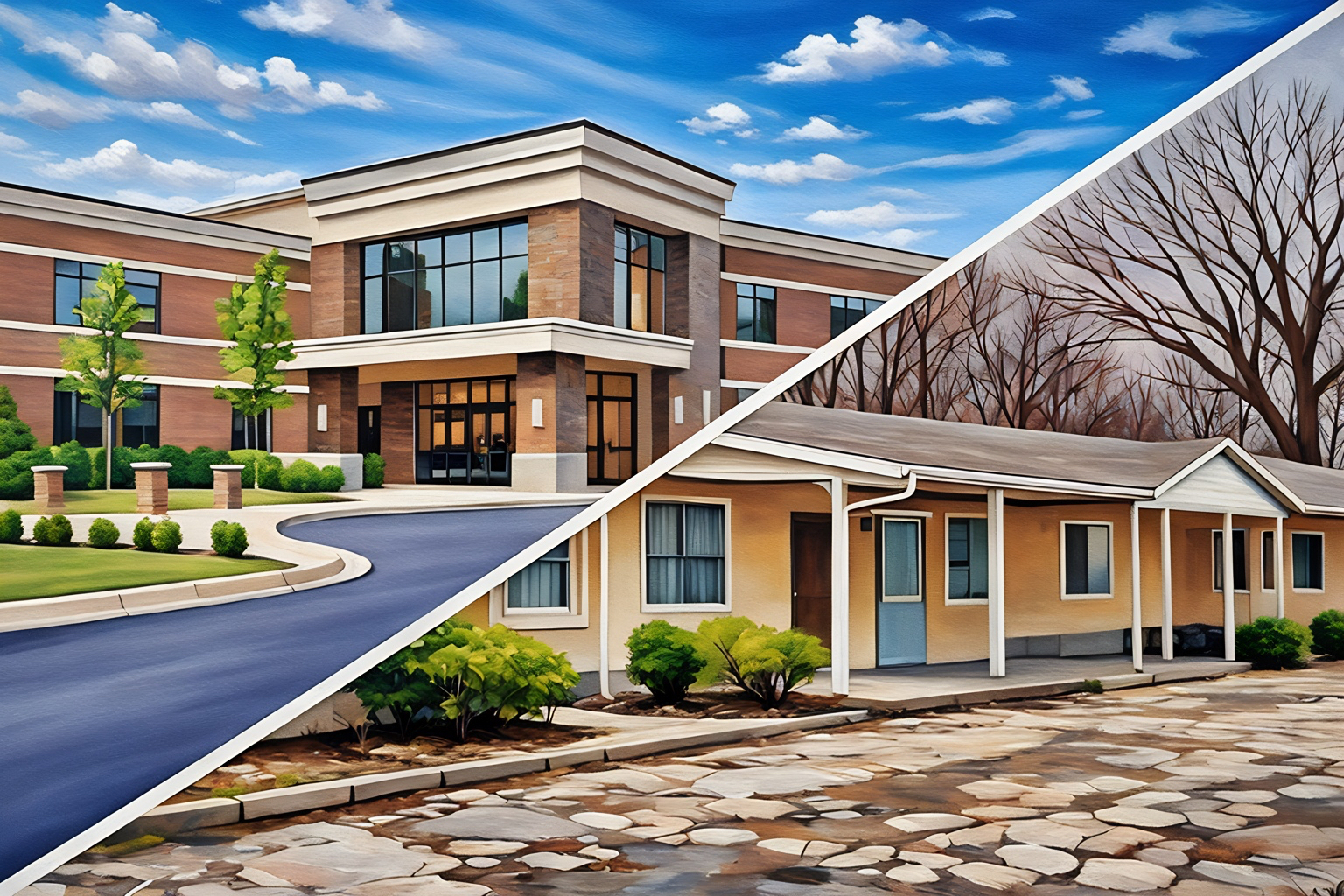
Medicaid currently treats fundamentally different buildings as financially equivalent. A facility built decades ago — designed around shared rooms, shared bathrooms, and institutional corridors — is often reimbursed in much the same manner as a facility designed for private rooms, private bathrooms, infection-resilient layouts, and technology-enabled care. That is not a neutral policy position. It is a choice. And the buildings that exist today reflect the consequences of that choice.
Life Safety Code sets the floor. The standards that determine whether a building actually supports good care and a dignified resident experience must sit above it. Existing regulatory frameworks establish a necessary and non-negotiable safety baseline. A facility that meets Life Safety Code requirements has cleared the minimum threshold for safe operation. But meeting that threshold does not make a building structurally capable of delivering contemporary care. The floor matters. It is not the standard.
Structural Quality Standards are that standard — and Medicaid reimbursement should be built around them. The private room with private bathroom is the entry condition. Six domains define what the full platform requires. A separate rebuttable presumption of obsolescence addresses aging facilities that can no longer credibly claim to meet contemporary expectations absent meaningful modernization.
This brief defines that framework. It is a companion to ASI’s From Capital to Capability: What Medicaid Pays For Determines What Gets Built, which addresses how SQS connects to payment policy. Here we define the standard itself.
II. The Case for a Structural Standard
The current reimbursement architecture was not designed to reward structural quality. It was designed to recognize costs — what facilities have spent on staff, operations, and capital invested in construction years or decades ago. That framework has no mechanism to distinguish between a building that supports contemporary care and one that has not been meaningfully updated in thirty years. Both qualify. Both get paid. The physical environment is invisible to the payment system.
The consequences fall hardest on the residents who can least afford them. Operators serving private-pay residents face genuine market pressure to invest in better environments — residents and families compare options and choose accordingly. Medicaid-dependent residents have fewer alternatives. The payment system that serves them provides no comparable pressure to improve the buildings they live in. The facilities that depend most heavily on Medicaid are often the ones operating in the oldest and least-updated environments.
The workforce dimension makes this more urgent. Staffing shortages are structural and will intensify. Care delivery will increasingly depend on telehealth, remote monitoring, and AI-assisted clinical support — tools that require physical infrastructure to function. A facility not updated to support these tools cannot fully participate in what care delivery will require, regardless of how much its operators invest in software, staffing models, or operational effort.
Emergency resilience compounds the stakes further. When power fails, when infectious disease spreads, when weather events or other emergencies require a facility to sustain operations independently, the physical infrastructure is what either holds or fails. Residents in nursing facilities cannot evacuate themselves. They depend entirely on the building and the systems within it. A payment system indifferent to whether that infrastructure is adequate is not serving them.
A structural standard exists to make the physical environment visible — to give states a defined, auditable, and implementable framework against which reimbursement can be aligned and investment can be directed.
III. The Foundation: Private Room with Private Bathroom
A private room with a private bathroom is the minimum physical condition for structural quality. It is the entry requirement for SQS. Without it, a facility does not meet the standard — regardless of how well it performs on other dimensions.
This is not a preference. It is a recognition of what the physical environment must provide to support dignity, infection control, family presence, and effective care delivery. Private rooms eliminate shared outbreak transmission pathways. They support end-of-life dignity without exposing other residents. They accommodate family presence meaningfully. They provide the acoustic and physical privacy that institutional shared rooms cannot.
The distinction between full SQS and partial progress is the heart of this framework — and it must be stated without ambiguity.
Full SQS requires a private room with a private bathroom. A facility that does not meet this standard may continue participating in Medicaid. It may receive recognition for partial modernization progress. It does not meet Structural Quality Standards, and it should not be reimbursed as though it does.
Two residents per room with appropriate bathroom access is baseline infrastructure — the minimum condition for continued participation, not the standard for contemporary care. States may permit semi-private facilities to continue operating. They should not pay those facilities as though they reflect structural quality.
Three or more residents per room, or rooms dependent on shared bathrooms serving multiple rooms or corridor populations, are legacy configurations. They reflect design assumptions from a prior era. They should not qualify for enhanced structural reimbursement under any circumstances.
States may create transition tiers that recognize and incentivize measurable progress toward SQS. Partial progress is worth recognizing. It is not SQS. That distinction must be preserved in how states design and administer payment — otherwise the framework loses its leverage.
IV. The Six SQS Domains
In addition to the private room and private bathroom requirement, a facility must demonstrate that its physical environment supports each of the following domains. These domains define the full structural platform required for contemporary nursing facility care.
ASI presents these domains as a durable framework whose specific content is intended to evolve. The domains are fixed. What each requires in practice will grow as care models develop and evidence accumulates.
1. Infection Control and Operational Resilience
A nursing facility must be capable of managing infectious risk without whole-building disruption. The COVID-19 pandemic made the consequences of inadequate infection-control design impossible to ignore. Facilities with shared rooms and shared bathrooms suffered worse outbreak trajectories. That is a design problem — one that reimbursement policy should stop being indifferent to.
SQS requires the physical capacity to isolate or cohort residents within defined units, separate resident populations during infectious events, and support infection-control workflows through the layout itself — adequate handwashing access, clean and soiled utility separation, and care areas that can function independently when necessary. Facilities that rely on shared bathrooms serving corridor populations cannot meet this standard. That is not incidental. It is the point. States may evaluate this domain through floor plan review, unit configuration, bathroom access patterns, and ventilation documentation.
2. Resident Privacy and Dignity
Beyond the private room requirement, the physical environment must actively support resident autonomy and dignified daily life. This includes acoustic privacy adequate to support confidential conversations, personal storage sufficient for meaningful personal possessions, space for family visitation without exposure to other residents, and layouts that support end-of-life dignity and family presence during serious illness.
Residents live in these buildings, often for extended periods and sometimes for the remainder of their lives. The environment must reflect that reality. States may evaluate this domain through room dimensions, acoustic separation, storage specifications, and designated family visitation space.
3. Resident Well-Being and Meaningful Environment
Nursing facility care is not limited to clinical treatment. Research consistently links the physical environment to resident mental health, social engagement, and cognitive outcomes. Isolation and institutional design contribute to depression, anxiety, and accelerated decline. The building can either mitigate those risks or compound them.
SQS requires physical spaces that support mental, emotional, and social well-being — not through any mandated specific amenity, but through demonstrated design capacity. Common spaces designed to support meaningful social engagement rather than institutional throughput. Areas for private family interaction. Access to natural light. Connection to outdoor environments where feasible. States may evaluate this domain through documentation of common space configuration, lighting standards, and outdoor access design.
4. Technology and Digital Infrastructure
Care delivery is increasingly technology-dependent, and that dependency will deepen. Telehealth, remote monitoring, digital communication tools, and AI-enabled care systems will increasingly supplement traditional staffing models. Residents and families already expect digital connectivity as a baseline condition of daily life. These are infrastructure requirements, not optional features.
SQS requires reliable facility-wide high-speed internet connectivity; physical infrastructure capable of supporting telehealth and remote clinical services; clinical system access at or near the point of care; capacity to support emerging technologies including remote monitoring and AI-enabled tools; and resident access to communication technology for connection with family and support services. States may evaluate this domain through connectivity documentation, infrastructure certification, and point-of-care access verification.
5. Staff Workflow and Care Delivery Efficiency
Building design directly affects staffing outcomes. Long travel distances, poor adjacencies, centralized nursing stations serving long institutional corridors, and inadequate support areas increase staff burden, reduce response time, and contribute to turnover. Poor building design creates poor staffing outcomes. A reimbursement system serious about workforce sustainability should not be indifferent to the physical conditions in which staff work.
SQS requires physical layouts that support efficient care delivery — reduced staff travel through thoughtful unit and support-area placement, appropriate location of clinical support functions including medication storage and documentation, visibility and accessibility consistent with safe supervision and timely response, and physical infrastructure that supports workforce recruitment, retention, and sustainability. States may evaluate this domain through unit layout review, staffing station placement, and travel-distance analysis.
6. Emergency Preparedness and Resilience
This domain carries particular weight. Nursing facility residents are among the most vulnerable populations in any emergency — non-ambulatory, cognitively impaired, medically dependent, and entirely reliant on the facility to protect them when external systems fail. The physical infrastructure of the building is not background context in an emergency. It is the difference between protection and catastrophe.
SQS requires emergency electrical capacity sufficient to sustain resident safety, medication storage, climate control in critical areas, and essential systems during extended outages. It requires physical design that supports safe evacuation of non-ambulatory and cognitively impaired residents — not as a theoretical plan but as a physical reality built into corridors, exits, and circulation. It requires infrastructure capable of operational continuity during external system failures, including water, power, and communication. And it requires design features that support resilience against foreseeable emergency conditions — severe weather, public health emergencies, fire, and other events that do not wait for convenient timing.
A facility that cannot protect its most vulnerable residents when conditions become difficult has failed at the most fundamental level. Emergency resilience is not a peripheral requirement. It is a core condition of structural quality. States may evaluate this domain through emergency power documentation, evacuation design review, backup system certification, and inspection of resilience-related infrastructure beyond baseline code requirements.
V. Building Age and Functional Obsolescence
Age alone does not determine structural quality. A facility substantially renovated to meet current standards at year thirty-five is more capable of delivering good care than one built five years ago that never met SQS. The relevant question is not how old the building is. It is whether the building can support what contemporary nursing facility care requires.
But age is a reliable indicator of the assumptions under which a building was designed. A facility that has operated for decades without meaningful structural investment almost certainly reflects the institutional vocabulary of its era — shared rooms, shared bathrooms, centralized nursing stations, long corridors designed for throughput rather than resident experience. Those assumptions are embedded in the physical structure. Operational excellence can work around them to a degree. It cannot eliminate them.
ASI believes states should establish a rebuttable presumption of structural obsolescence for facilities exceeding a defined age threshold without qualifying modernization. The presumption does not reduce payment automatically. It places the burden on the facility to demonstrate that it has been meaningfully updated rather than placing the burden on the state to prove that it has not. This presumption is rebuttable, evidence-based, and applied facility by facility. It is not a categorical judgment about age.
A threshold of approximately thirty years, with state discretion to adjust based on market conditions and facility vintage, is a reasonable starting point — calibrated to identify buildings whose original design assumptions predate contemporary expectations for privacy, infection control, technology infrastructure, and emergency resilience.
What constitutes qualifying modernization must be defined with precision, because vague standards will be exploited. Routine maintenance does not qualify. Cosmetic renovation does not qualify. Qualifying modernization changes what the building can do. Converting shared rooms to private rooms with private bathrooms qualifies. Reconfiguring units to support infection-control separation qualifies. Installing infrastructure for technology-enabled care delivery qualifies. Upgrading emergency power and life-safety systems beyond baseline code requirements qualifies. The test is functional: does the building now support what a contemporary nursing facility is expected to support?
The burden belongs on the owner of the aging asset. After a defined threshold, the presumption is against enhanced payment. The facility earns its way back through demonstrated investment — not through attestation or accounting, but through physical evidence that the building has changed.
VI. What States Should Do
The three steps that follow are the practical takeaway from this framework. They give states a clear path from concept to implementation.
First, adopt SQS as the defined standard for full structural-quality reimbursement. The private room with private bathroom is the entry condition. The six domains define the full platform. States that connect enhanced reimbursement to this standard create a clear market direction — one that tells providers, investors, and developers what a qualifying nursing facility must be capable of.
Second, create transition tiers that recognize and incentivize measurable progress toward SQS. Most existing facilities will not achieve full SQS immediately. Many can make meaningful progress. Recognizing that progress through reimbursement — at a level below full SQS but above legacy — gives facilities a financial reason to move in the right direction without pretending that partial compliance is the destination. The distinction between transitional recognition and full SQS must be maintained and enforced.
Third, apply a rebuttable presumption of structural obsolescence for facilities exceeding a defined age threshold without qualifying modernization. Age is the trigger. Capability is the standard. The burden is on the facility to demonstrate that it has invested meaningfully enough to meet contemporary structural expectations. Facilities that cannot make that demonstration should not continue receiving enhanced reimbursement as though they have.
Access concerns do not justify lowering the standard. Rural and underserved communities deserve the same structural quality as residents anywhere else. States may address access concerns through targeted funding, phased timelines, transition support, and hardship provisions — but not by defining structural quality downward for some facilities. The standard is universal. The path to achieving it may vary.
For detailed payment methodology — including Medicaid rate structure, Medicare implications, and the age-based payment presumption in practice — see the companion brief: From Capital to Capability: What Medicaid Pays For Determines What Gets Built.
VII. Conclusion
Medicaid can continue paying as though a structurally obsolete building and a structurally capable one are equivalent. It has been doing so for decades. The buildings that exist today are the result.
Or it can adopt a standard that tells the market — clearly, operationally, and with real financial consequences — what the next generation of nursing facility infrastructure must be capable of supporting. Private rooms with private bathrooms. Infection-resilient design. Environments that support resident well-being and dignity. Technology infrastructure that enables contemporary care delivery. Staff-efficient layouts. Buildings that can protect their most vulnerable residents when emergencies arise.
Structural Quality Standards are that standard: a framework grounded in what contemporary care requires and capable of driving real investment through reimbursement policy.
The question is not whether nursing facilities need better physical environments. They do. The question is whether Medicaid policy will create the conditions for that to happen.
States have the framework. They have the authority. They should use both.
** See companion brief: From Capital to Capability: What Medicaid Pays For Determines What Gets Built **