TL;DR: America's nursing facility infrastructure is aging — and CHOP and CHOW approvals are not keeping pace. When an older facility changes hands, the approval process focuses on the operator. It should also focus on the building. At a minimum, states should require Life Safety Code inspection, local building inspection, and fire safety review for facilities 50 years of age or older, with correction of all identified deficiencies and certification of compliance before any transfer is approved. That protects residents, staff, and responsible incoming operators alike. It is a floor. Not a ceiling.
An Aging Sector
America's nursing facility infrastructure is aging — and the consequences are no longer theoretical.
Most nursing facilities were built for a model of care that no longer exists. Long corridors. Shared rooms. Outdated mechanical systems. Buildings designed in the 1960s and 1970s — for a different era, a different patient, and a different standard of care. ASI has written separately about the broader case for Structural Quality Standards as the right long-term policy response to an infrastructure crisis that Medicaid reimbursement has long ignored. That work continues.
But there is a narrower problem that demands attention right now.
When an aging nursing facility changes hands — through a change of ownership or a change of operator — states are already required to review and approve the transaction. That approval process exists because continued Medicaid participation is not automatic. The state has a legitimate interest in who operates these facilities and under what conditions.
States are not using that authority to its full potential.
Recent news has made the consequences concrete. Facilities with documented safety violations and deferred maintenance have changed hands — and when something goes wrong, it is residents who are put at risk, staff who work in unsafe conditions, and incoming operators who inherit the liability. That is what happens when a CHOP or CHOW moves through a process built around paper review — operator credentials, financial disclosures, regulatory history — while the physical plant gets little more than a cursory look. For an aging building with compromised infrastructure, that is not enough.
States have the authority to require more. They should use it.
The Review That Does Not Happen
The core reform is straightforward.
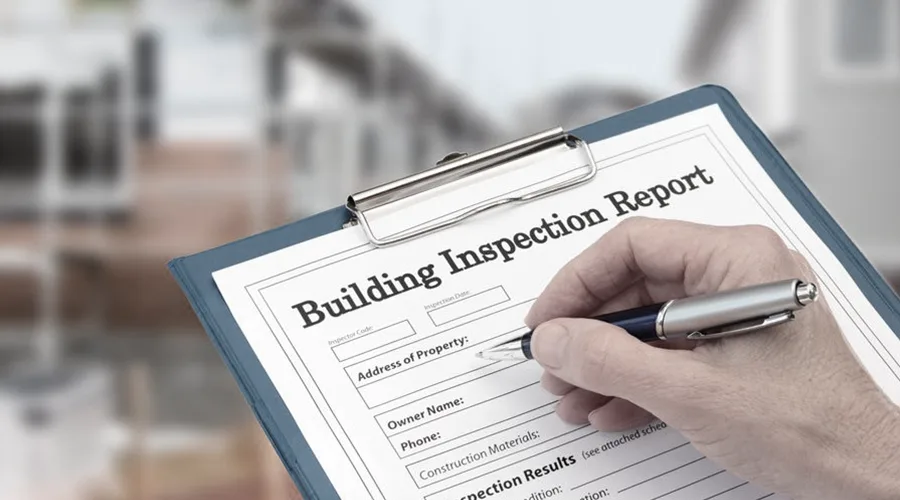
For any nursing facility that has reached a defined age threshold — 50 years is a reasonable starting point — states should require advance notice of a proposed CHOP or CHOW far enough in advance to schedule the following onsite reviews:
- Life Safety Code inspection
- Local building or code inspection by the authority having jurisdiction
- Fire safety review by the appropriate authority having jurisdiction
- Any other physical-plant or occupancy-related review required under state or local law
LSC alone is not sufficient. A Life Safety Code inspection covers the federal standards CMS enforces through state survey agencies — but it does not reach everything a local building inspection would catch. Structural conditions, plumbing, electrical systems, local code amendments, certificate of occupancy questions — these fall outside LSC's scope. Both reviews are necessary.
Once deficiencies are identified, the rule should follow without exception: the CHOP or CHOW application cannot be approved until all required corrections have been completed and the appropriate authority has certified compliance.
Not a ban. Not an aspirational capital plan. Not a vague modernization promise. A clear condition of approval: inspect first, fix what is required, then approve the transfer.
States Could Go Further — and Some Should
The inspection-and-correction model is a floor. It does not solve the broader problem of buildings that are technically compliant but no longer aligned with the future of nursing facility care.
States that want to go further have options. A more comprehensive older-facility CHOP/CHOW review could include:
- Certifications about major renovations and capital improvements — documentation of meaningful investment, not just deferred-into-paper-compliance maintenance
- Disclosure of deferred maintenance and life-safety concerns — a full accounting of what the seller knows about the building's condition at the time of transfer
- A formal physical plant condition assessment — a documented baseline of the building's actual state, noting remaining useful life of major systems, deferred maintenance quantification, and capital needs forecasting over a 10- to 20-year horizon
- Financial commitments or escrow arrangements — ensuring the incoming operator has the resources and obligation to make required improvements, not just the intention
- Quality and survey history review — an older building with a poor compliance record presents compounding risk
- Proof of financial capacity and a credible modernization plan — a building that will require significant investment should not be handed to an operator who cannot or will not make it
None of this requires reinventing the CHOP/CHOW process. It requires treating older-facility transfers as what they are: transactions with elevated risk that warrant elevated scrutiny.
A Floor, Not a Ceiling
Requiring inspection, correction, and certification before approving a CHOP or CHOW for an older facility is the minimum the state should demand. It does not transform aging infrastructure into next-generation care environments. It does not address the deeper question of how Medicaid reimbursement must evolve to drive meaningful capital investment in the sector. Those are the questions ASI's Structural Quality Standards framework is designed to answer. But a sector that cannot ensure its oldest buildings meet basic code requirements at the moment of transfer is not ready for that larger conversation. This reform clears the floor. The work of raising the ceiling continues.
To learn more about ASI's Structural Quality Standards framework, read our policy briefs: Structural Quality Standards for Nursing Facilities and From Capital to Capability: What Medicaid Pays For Determines What Gets Built.