ASI recently made a straightforward argument: when a nursing facility changes hands, approve the operator — but inspect the building, too.
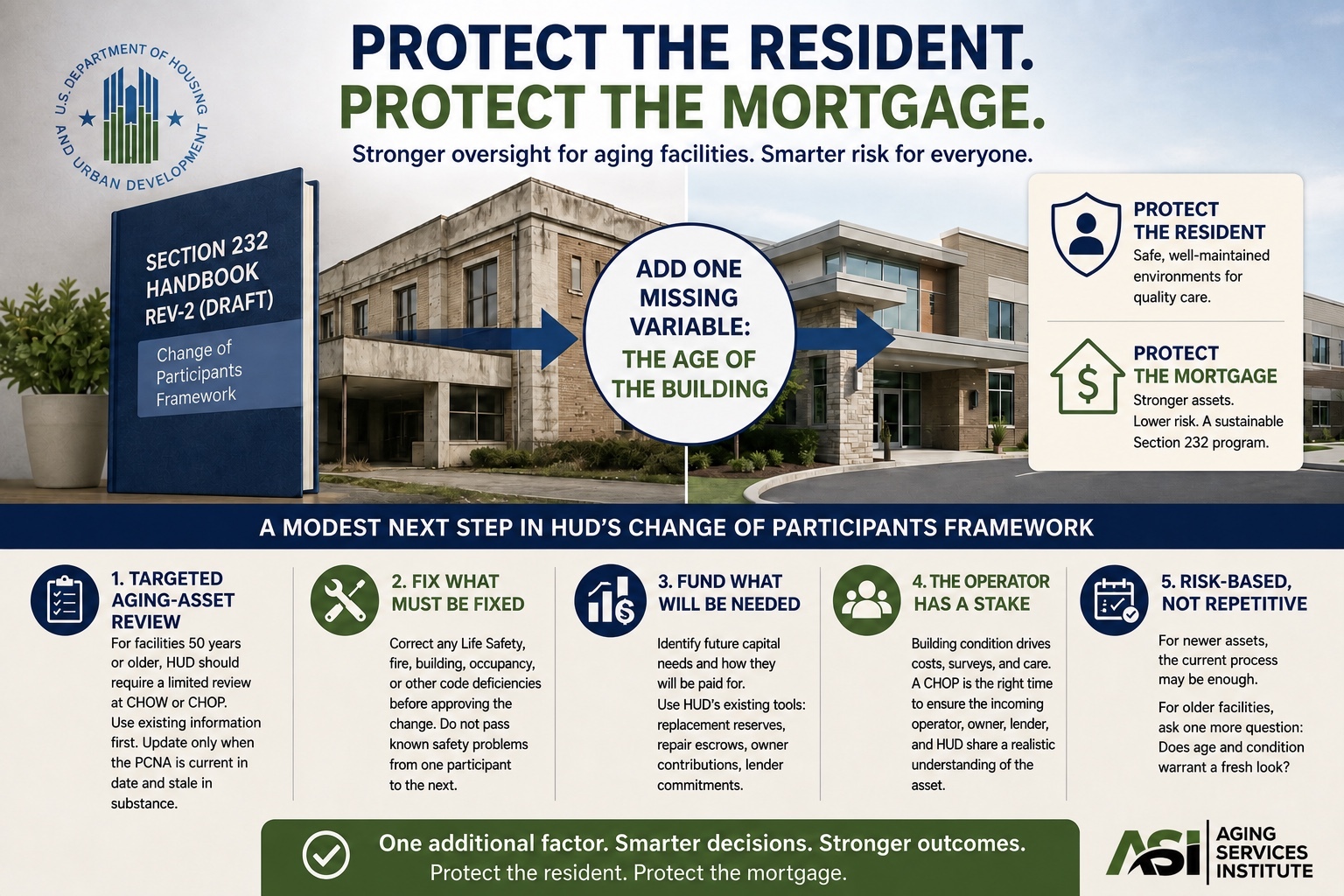
States already use the CHOW or CHOP process to evaluate whether an incoming operator should be permitted to take responsibility for a nursing facility. That same moment should also be used to establish the condition of the physical plant, particularly for older facilities. At a minimum, that means Life Safety Code, building, and fire-safety inspections, with required deficiencies corrected before the transfer is approved.
A new study in JAMA Health Forum adds an important piece to that argument: the timing.
Researchers tracked 33,110 nursing home locations over 40 years, from 1985 through June 2025. They identified 13,053 change-of-ownership events. Roughly one in five facilities remained operational while undergoing at least one ownership transition. The study's broader finding is more pointed still: what shows up in federal data as facility "closure" often does not mean the physical facility actually closed. It may instead reflect restructuring — ownership or organizational changes while the facility continues operating.
That matters for quality policy.
If nursing facilities increasingly change through transfers, reorganizations, and ownership restructuring rather than simply opening and closing, policymakers should treat those transition points as the leverage points they are.
A CHOW or CHOP creates a natural inflection point. The state already has a transaction in front of it. The incoming operator is already being evaluated. There is an identifiable moment at which additional scrutiny can occur before responsibility for residents and the facility passes to someone new.
The JAMA study does not examine building conditions or establish that CHOW inspections improve resident outcomes. But it demonstrates why the transfer process matters: these transitions are not peripheral events. They are increasingly how the nursing home sector changes.
If we are serious about structural quality, genuine safety, and resident experience, we should use that moment.
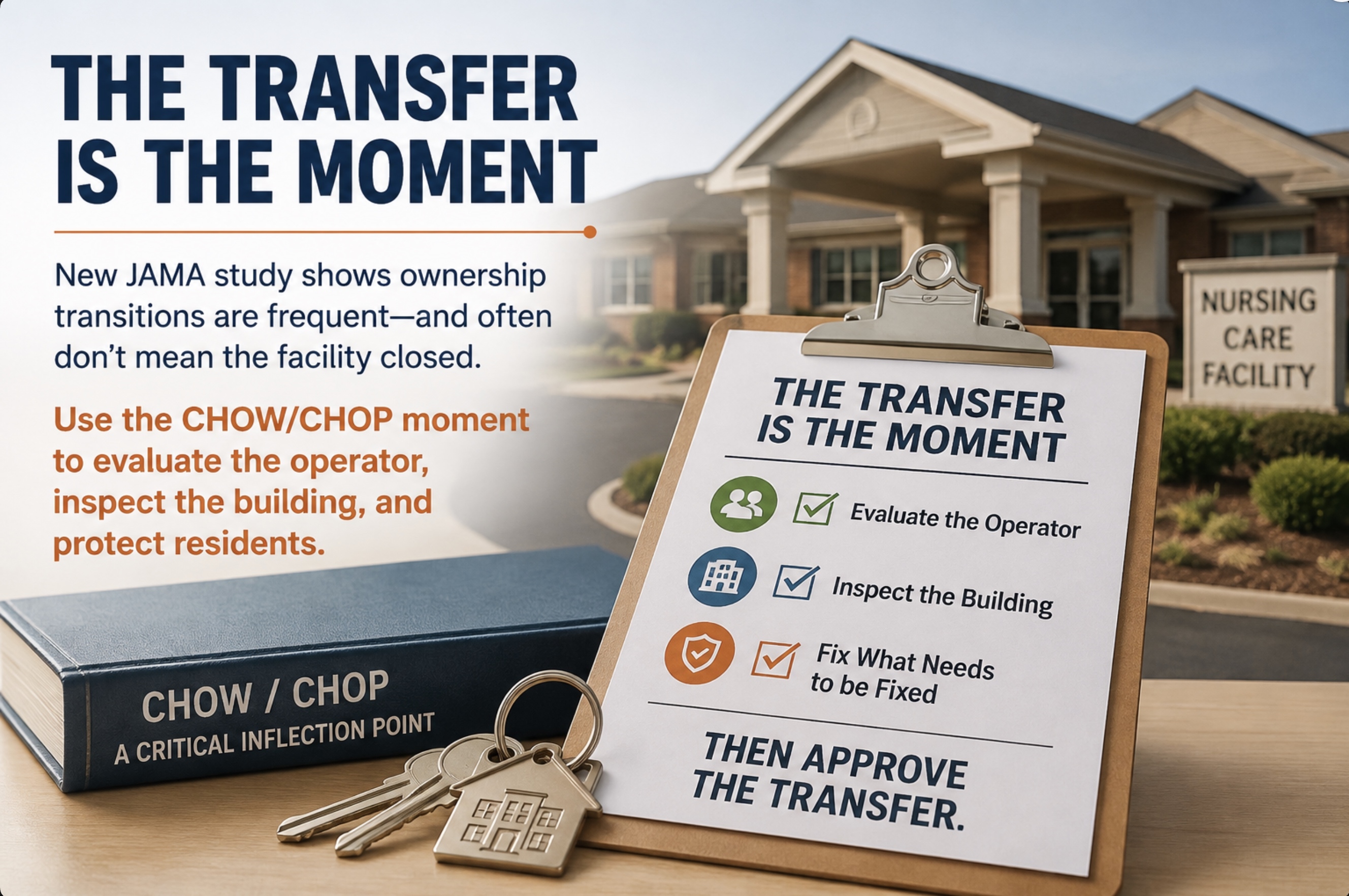
Evaluate the operator. Inspect the building. Fix what needs to be fixed. Then approve the transfer.
The opportunity is already built into the system. The JAMA study shows how often it arrives — and why looking only at "closures" can cause policymakers to miss it.